

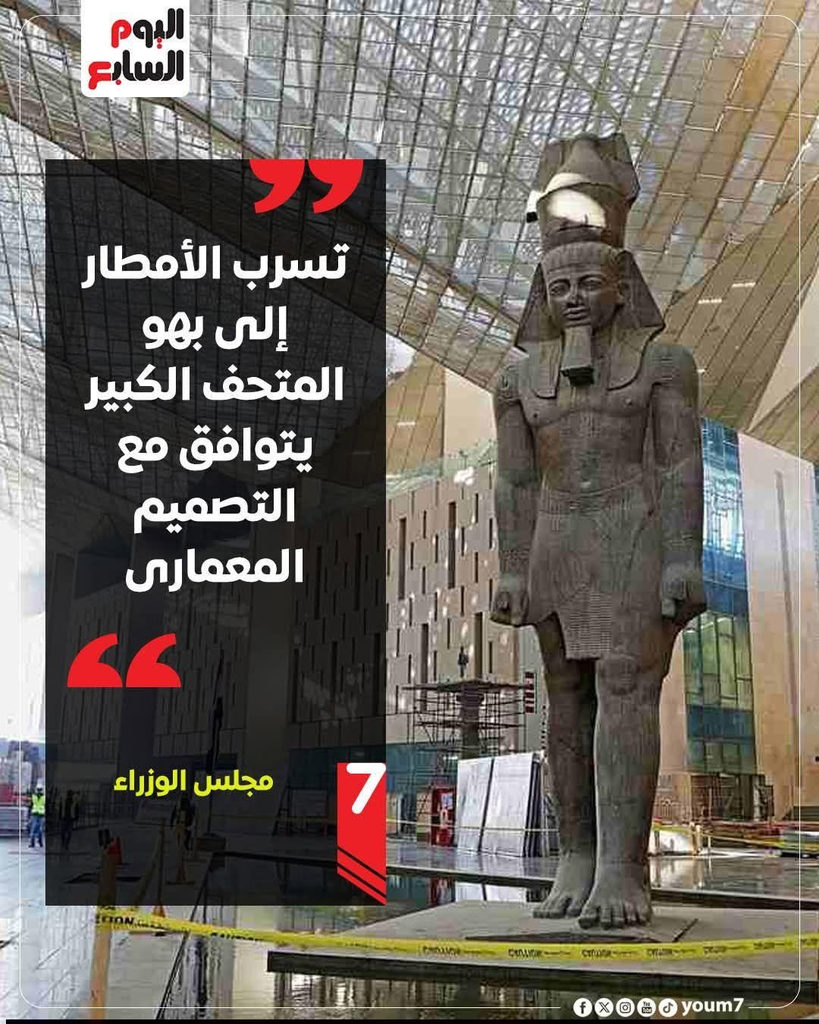
The image presents a monumental ancient Egyptian statue displayed inside a vast modern museum interior. Rising beneath an expansive glass-and-steel roof, the sculpture becomes the visual center of a space where archaeological heritage and contemporary architecture meet.
The Arabic text over the photograph refers to rainwater leaking into the Grand Egyptian Museum and states that the situation is compatible with the architectural design. The graphic therefore combines cultural imagery with a contemporary discussion surrounding the operation and design of a major museum complex.
Large archaeological museums face a distinctive challenge: they must protect extremely valuable historical objects while also creating spaces capable of accommodating large numbers of visitors. Environmental control, lighting, security, circulation, and structural engineering all become part of the preservation process.
The statue dominates the composition because of its enormous scale. Viewed from a relatively low perspective, the figure appears even taller, emphasizing the monumental character traditionally associated with ancient Egyptian royal sculpture.
Behind it, the museum architecture provides a dramatic contrast. Transparent roofing, geometric structural elements, high ceilings, and open interior spaces represent a distinctly contemporary approach to displaying objects created thousands of years earlier.
This contrast between ancient artifact and modern building is central to the visual experience. Rather than presenting the sculpture within a reconstructed historical environment, the museum allows visitors to encounter it within an unmistakably modern cultural institution.
The image also demonstrates how museums themselves increasingly become subjects of public discussion. Attention may focus not only on collections and exhibitions but also on architecture, construction, maintenance, visitor experience, and the long-term protection of cultural heritage.
For institutions housing archaeological material, these practical considerations are particularly significant. Preservation requires continuous monitoring of environmental conditions and infrastructure so that objects can remain accessible to future generations.
The social-media style graphic adds another dimension by transforming a museum photograph into a piece of visual news communication. Large text, quotation marks, branding, and a prominent image allow information to be understood quickly as audiences scroll through digital platforms.
Ultimately, the scene illustrates the relationship between history and the institutions responsible for presenting it today. The ancient statue represents cultural continuity, while the surrounding architecture reflects the modern responsibility of preserving, interpreting, and sharing that heritage with a global audience.
©2016 Copyright All Rights Reserved by Velvet Glow Daily